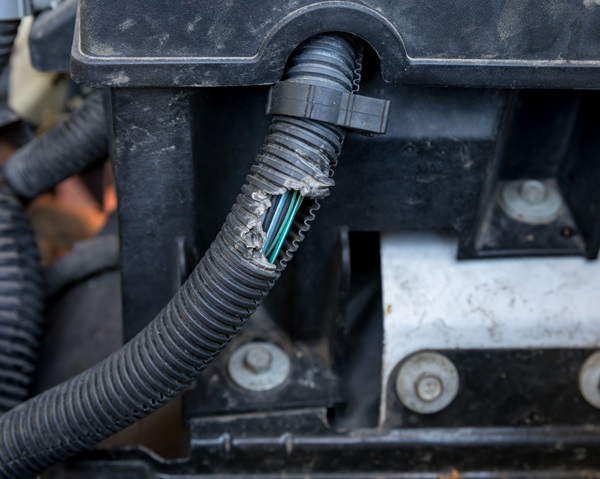
The car ran normally when you parked it. Now a warning light is on, one accessory has stopped working, or the engine won't start. Under the hood, you notice scraps of material where they shouldn't be.
Rodents sometimes nest in sheltered areas of a vehicle and chew wiring or hoses. The damage can range from a single visible wire to hidden trouble inside a harness. Start by leaving the area undisturbed and scheduling a check, especially if insulation is missing or a nest is near hot or moving parts.
Why a Parked Car Attracts Rodents
An engine compartment offers shelter and protected spaces for nesting. A vehicle parked for an extended time leaves those spaces undisturbed, but a regularly driven car isn't immune. Nearby food, pet supplies, dense vegetation, and stored material sometimes encourage activity around the parking area. Avoid assuming one particular wire coating explains every case. Finding where the animal entered and what it damaged is more productive than deciding every plastic-covered wire is the cause.
Chewed Wiring Creates Different Kinds of Faults
A cut conductor interrupts power or a signal. Damaged insulation sometimes leaves wires touching each other or nearby metal, producing a short circuit. A partial bite also leaves a wire connected until vibration or heat changes the contact.
That explains why symptoms vary. One car won't crank; another starts but turns on several warnings. A code naming a sensor sometimes reflects the missing wire signal rather than a failed sensor. We'd check the connection and circuit before ordering the part named on the scan result.
Signs of Rodent Activity Around the Car
Look for these clues during a safe parked check:
- Nesting material near the engine or air intake
- Chew marks or missing wire insulation
- Damaged hoses or soft rubber parts
- Food shells or unusual debris under the hood
- Repeated droppings around the parking space
Keep hands away from nests and droppings, and avoid blowing debris through the engine bay with compressed air. Cleanup needs to account for contamination as well as the vehicle. Tell the shop what you found so the work can be planned before parts are disturbed.
Why the First Visible Wire Isn't Always the Whole Repair
A harness runs through spaces that aren't obvious from above. The nearest damaged section sometimes has more chewed wires behind a cover or farther along the route. Nesting material also hides connections that would otherwise be easy to inspect.
We'd trace the affected circuits and inspect nearby branches, then test power, ground, or signal continuity according to what stopped working. If several faults appeared together, we'd look for shared wiring before treating each warning as an independent failed part. That keeps repairs from ending after the most visible bite mark is covered.
Rodent Damage Near Engine Sensors
Engine controls depend on readings such as temperature, air measurement, and crankshaft position. A damaged wire changes the information reaching the computer or interrupts it completely.
The test should compare the sensor's readings with the engine's behavior, then check supply, ground, and signal at the connection. If a wire is open, the repair needs to restore that circuit. Replacing a sound sensor leaves the broken path in place, and the same warning returns.
Repairing Rodent Wiring Damage Safely
Electrical tape over a broken conductor doesn't restore its connection. Even if a wire still conducts, damaged insulation needs a repair that protects it from heat, vibration, and moisture. The manufacturer's repair instructions determine whether a section can be repaired or a harness needs replacement. Connector damage, shielded wiring, and the location of the bite all affect the method. We'd explain which wires failed and what to replace or repair, rather than quoting a generic patch without checking the circuit.
If you see exposed conductors, fuel leakage, or a nest close to the exhaust, belt, or fan, leave the engine off until the area is assessed. A burning smell or smoke needs a safe stop and shutdown. If you see flames or there's immediate danger, move people and traffic away from the vehicle when safe, then call emergency services. Hybrid and electric vehicles require another boundary: don't disturb orange high-voltage cables or their covers. A small animal doesn't make that equipment safe to touch. Describe what you found and let trained personnel follow the vehicle's isolation procedure.
Reduce the Conditions That Encourage Rodents
Keep food and pet supplies away from the parking area, remove surrounding clutter, and check a stored vehicle regularly. Repairs should leave covers and seals in their intended condition, so other work doesn't leave an opening available.
Avoid relying on a scent product as a guaranteed solution. Products and deterrents vary, and some materials create new hazards around heat or ventilation. Discuss prevention that fits the parking location after the damage is repaired. If activity continues around the building or garage, pest-control help might be needed beyond the car itself.
Electrical Repair at TL Motors
TL Motors in Covina, CA, can inspect chewed wiring, related warning lights, and starting problems. Tell us about any visible nesting material and which functions stopped working so we can plan circuit checks and handle the vehicle safely.
Contact TL Motors to arrange an electrical inspection for suspected rodent damage.