Tires wear down gradually, which makes it easy to overlook their condition. However, you might eventually notice increased road noise that wasn't there before, or feel a change in steering. By the time most drivers check the tread depth, the wear pattern is likely already established.
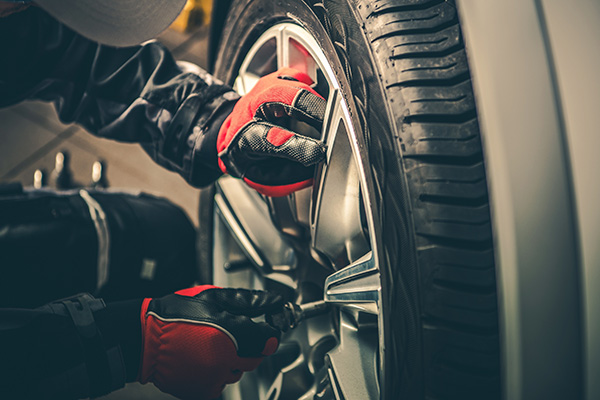
Tire rotation is one of the simplest ways to keep that story from ending early. It helps your tires wear evenly, and it gives you a chance to spot alignment and suspension issues before they ruin a set of tires.
Why Tires Rarely Wear Evenly
Even on a well-maintained vehicle, each tire lives a different life. Front tires often wear faster on front-wheel-drive vehicles because they handle steering and power delivery. Rear tires can develop different wear patterns depending on suspension geometry. All-wheel drive does not guarantee even wear, either, because weight distribution and alignment still affect the corners differently.
That’s why rotation matters. Moving tires to different positions evens out those differences and can help you get closer to the full lifespan you paid for.
How Often Should You Rotate Your Tires?
A practical interval for many vehicles is about every 5,000 to 7,500 miles. That timing lines up well with many oil service schedules, which makes it easier to remember.
Some vehicles and tire types prefer a tighter interval, especially if you drive in heavy stop-and-go traffic, hit potholes regularly, or do a lot of highway miles at higher speeds. If your tires are showing uneven wear early, rotating sooner is often the right move.
If you’re unsure, the safest approach is to rotate on the shorter side and adjust based on how your tires wear. Over-rotating does not usually hurt anything. Under-rotating can shorten tire life quickly.
How Long Should Tires Last in Real Life?
Tire lifespan depends on three big things: the tire itself, the vehicle it’s on, and how it’s driven. Some tires are built for long tread life, while performance tires trade longevity for grip. A heavy vehicle can wear tires faster than a lighter one. Driving habits also matter more than most people expect.
Most tires last somewhere in the 40,000 to 70,000 mile range when maintenance is consistent. Some sets last longer, and some wear out far sooner. If a set is wearing out early, it usually means there is an underlying reason, not bad luck.
Time matters too. Rubber ages even if you do not drive much. If the tread looks fine but the tires are old and cracking, replacement can still be the safer choice.
What Uneven Wear Patterns Are Trying To Tell You
Tires give clues when something is off, and rotation is often when those clues get noticed.
If the inside edge wears faster, alignment can be part of the story. If the tread feels choppy or scalloped, worn shocks or struts become more likely. If the center wears faster than the edges, over-inflation is common. If both edges wear fast, under-inflation is often involved.
These patterns matter because rotating tires without addressing the cause can spread the wear rather than fixing it. Rotation is important, but it works best when alignment and suspension condition are also kept in check.
Rotation Patterns: What Works for Most Vehicles
Rotation pattern depends on whether your tires are directional, whether you have staggered sizes, and whether your vehicle is front-, rear-, or all-wheel drive. Many vehicles use a front-to-rear cross pattern or a straight front-to-rear pattern.
Directional tires only rotate in one direction, so they usually move front-to-rear on the same side. Staggered setups may not allow rotation at all, or may limit it. That is why tire type matters, and it is worth confirming the correct pattern instead of assuming.
A proper rotation also includes checking tire pressure and inspecting for punctures or sidewall damage. A nail can sit in the tread and leak slowly, and rotation is often when it gets caught.
Owner Habits That Shorten Tire Life
Some habits quietly wear tires faster. Hard acceleration and aggressive braking increase wear and heat. Taking turns quickly can scrub the outer edges of tires. Driving on under-inflated tires creates extra heat and can wear the shoulders faster. Hitting potholes can knock alignment out, which can destroy tread surprisingly fast.
If you regularly drive on rough roads or deal with construction areas, it’s smart to inspect tires more often. A small alignment change can turn into a big tread loss over a few thousand miles.
Get Tire Rotation and Vehicle Maintenance in Covina, CA, with TL Motors
We can rotate your tires on the correct pattern for your vehicle, check tread depth and wear patterns, and inspect for punctures, pressure issues, and alignment-related wear. We’ll help you get the most life out of your tires and avoid replacing them early because of an issue that could have been corrected.
Call TL Motors in Covina, CA, to schedule a tire rotation and keep your tires wearing evenly mile after mile.