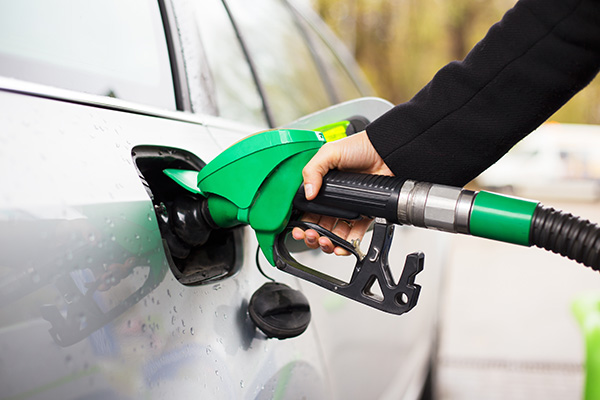
Fuel economy tends to change gradually, which makes a drop in MPG easy to miss. You might notice that a tank no longer lasts as long as it used to, or that your usual commute takes a little more fuel even though your driving habits have not changed much.
Some variation is normal because traffic, weather, trip length, and how much time the engine spends idling all affect mileage. But when fuel use stays higher for several tanks, it is worth checking the condition of the engine, tires, and systems that affect how efficiently the car moves.
Start With Tire Pressure and Rolling Resistance
Underinflated tires create more rolling resistance, so the engine has to work harder to keep the vehicle moving. Even a modest pressure difference can also change handling and tire wear.
Check tire pressures when the tires are cold and use the specification listed for the vehicle, not the maximum pressure printed on the tire sidewall. We also look for uneven tread wear, alignment problems, or a tire that is beginning to lose pressure. If one wheel is dragging because of a brake problem, that extra resistance can hurt MPG as well.
Watch for Changes in Engine Performance
A fuel economy problem does not always come with a check engine light. The engine might still start easily and feel acceptable while a sensor or mechanical issue causes the computer to use more fuel than necessary.
Pay attention to changes such as:
- Slower acceleration than you remember
- A rough or uneven idle
- Hesitation when you press the accelerator
- Longer cranking before the engine starts
- A fuel smell from the exhaust or engine bay
- The transmission staying in lower gears longer
- The temperature gauge taking unusually long to reach normal range
At our shop, those details help us decide whether the mileage loss is related to engine operation or something outside the engine.
A Thermostat Problem Can Keep the Engine Too Cool
Modern engines are designed to reach a specific operating temperature and stay there. If the thermostat sticks open, coolant can circulate too early and keep the engine cooler than intended, especially during highway driving or colder weather.
The engine computer may respond by using a richer fuel mixture for longer. You might also notice weak cabin heat or a temperature gauge that sits lower than it used to. We can compare coolant temperature data with the vehicle's expected range rather than assuming the thermostat is working because the engine never overheats.
Sensors Affect How Much Fuel the Engine Uses
The engine computer relies on sensors to calculate fuel delivery. Oxygen sensors, mass airflow sensors, manifold pressure sensors, coolant temperature sensors, and several other inputs can influence those calculations.
A sensor doesn't have to fail to cause trouble. An inaccurate but still believable reading can shift fuel trim without immediately setting a warning light. During an inspection, we look at live data and fuel trim rather than replacing sensors simply because fuel economy has dropped.
Ignition and Fuel System Problems Waste Energy
Worn spark plugs, weak ignition coils, dirty fuel injectors, or poor fuel pressure can interfere with combustion. The result may be a misfire you can feel, but smaller problems sometimes show up first as reduced power and higher fuel use.
Fuel injector problems need diagnosis rather than automatic treatment with additives. An injector can be restricted, leak, or have an electrical fault, and each problem calls for a different repair. If the engine runs well and scan data looks normal, there may be no reason to clean or replace fuel-system parts just to chase a small change in MPG.
Driving Habits Have a Bigger Effect Than Many Parts
Hard acceleration uses more fuel because the engine has to produce more power quickly. High cruising speeds also increase aerodynamic drag, and repeated short trips prevent the engine from spending much time at its most efficient temperature.
Several habits can help:
- Accelerate progressively instead of using full throttle when it is unnecessary
- Leave extra space so you can avoid repeated hard braking and acceleration
- Remove heavy cargo you do not need to carry every day
- Limit long periods of unnecessary idling
- Use cruise control where road and traffic conditions make it practical
- Combine short errands when possible
These changes will not repair a mechanical problem, but they can make a noticeable difference when the vehicle is already operating correctly.
Do Not Chase MPG With Unnecessary Parts
Replacing air filters, spark plugs, sensors, or fuel-system components earlier than required does not automatically improve mileage. Install a clean engine air filter when needed, but modern fuel-injected engines can compensate for moderate filter loading without suddenly using much more fuel.
Regular maintenance is still important because correct fluids, properly inflated tires, healthy ignition parts, and timely engine service keep the vehicle operating as designed. The goal is to correct real restrictions, wear, or control problems rather than replacing parts based on fuel economy alone.
Get Fuel Economy And Engine Diagnostics In Covina, CA, With TL Motors
If your car is using more fuel than it used to, TL Motors in Covina, CA, can check tire condition, engine data, fuel trim, operating temperature, ignition performance, and other systems that affect MPG.
Schedule a visit to find out whether the change is due to driving conditions, normal wear, or a problem that needs repair.