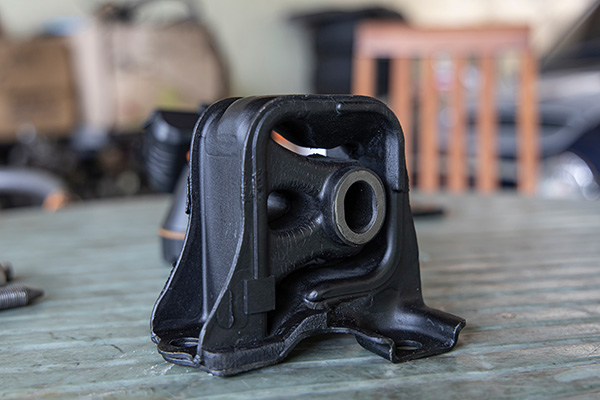
Motor mounts are the parts that hold your engine and transmission in place while keeping vibration under control. When they are healthy, you barely notice them because the vehicle feels stable and shifts feel normal. When they wear out, the drivetrain can move more than it should, and the car starts feeling rough, noisy, or jumpy in ways that are easy to misread.
Catching mount problems early can prevent a small comfort issue from turning into broken parts.
What Motor Mounts Do Every Day
Motor mounts secure the engine and, on many vehicles, help support the transmission too. They are designed to handle torque, which is the twisting force the engine creates when you accelerate, shift, or climb a hill. At the same time, they isolate vibration so you do not feel every pulse of the engine in the steering wheel and seats.
Most mounts are rubber-and-metal assemblies, sometimes filled with fluid for extra vibration control. That rubber is meant to flex, but only within a certain range. Once it tears, separates, or collapses, the drivetrain starts moving in ways it was never meant to.
How Motor Mounts Wear Out Over Time
Heat and age are the biggest enemies. Rubber hardens and cracks after years of engine heat, and fluid-filled mounts can leak and lose their damping ability. Hard acceleration, rough roads, and frequent stop-and-go driving also speed up wear because the engine rocks back and forth more often.
Oil leaks can make things worse. When rubber mounts get soaked in oil, they soften and deteriorate faster, and the mount may fail earlier than expected. That is why fixing small oil leaks can sometimes protect mounts and other rubber components at the same time.
Signs Your Motor Mounts Are Failing
A worn mount can show up as noise, vibration, or a sudden jolt when the drivetrain shifts position. The most common signs usually happen during starts, stops, and gear changes, when torque is highest. If you notice any of the symptoms below becoming more frequent, it is worth getting checked soon.
- A clunk or thump when shifting into Drive or Reverse
- A harsh jolt when you accelerate from a stop
- Excess vibration at idle, especially with the A/C on
- A bang when you let off the gas and get back on it
- The engine looks like it rocks or twists more than normal when revved lightly
These symptoms can overlap with transmission or suspension issues, which is why pattern matters. If the noise happens mainly during torque changes, mounts move higher on the suspect list.
What Can Get Damaged If You Keep Driving
When mounts are weak, the drivetrain can shift enough to stress parts around it. Exhaust components can crack or develop leaks because the exhaust is being pulled and pushed more than it should. Hoses and wiring can rub, stretch, or get pinched, especially if the engine is moving farther than designed.
You can also get driveline noise that sounds like a transmission problem. A worn mount can make normal shifts feel harsh because the engine and transmission are physically rocking during the shift. Over time, that extra movement can contribute to premature wear in other components that were never meant to absorb that kind of motion.
How Motor Mount Problems Are Confirmed
A proper check starts with an inspection of the mounts for cracking, separation, or fluid leakage on hydraulic designs. In our shop, we also look for witness marks, which are shiny rub spots that show the drivetrain has been moving and contacting nearby parts. Controlled load checks can reveal excessive engine movement that you may not spot just by looking.
Our technicians also pay attention to what the driver feels during specific actions, like shifting into gear, light acceleration, and braking. Those moments load the mounts in predictable ways, so the symptoms tend to repeat. Confirming the root cause matters because replacing the wrong part will not stop the clunk.
Tips To Help Mounts Last Longer
You cannot prevent all mount wear, but you can slow it down. Avoiding repeated hard launches helps because that is when mounts get hit with the highest torque spike. Fixing oil leaks early also protects rubber from breaking down faster than it should.
It also helps to stay consistent with regular maintenance, because small drivability issues can increase vibration and make mounts work harder. If you ever notice new clunks, a sudden increase in vibration, or a change in shift feel, book service while it is still a one-part problem instead of a chain reaction.
Get Motor Mount Replacement In Covina, CA, With TL Motors
If you’re dealing with clunks on takeoff, harsh gear engagement, or new vibration that was not there before, the next step is to book service so worn motor mounts can be replaced before they stress other components.
Schedule service with TL Motors in Covina, CA, to get the drivetrain secured again and keep the vehicle feeling solid every time you accelerate, shift, or come to a stop.