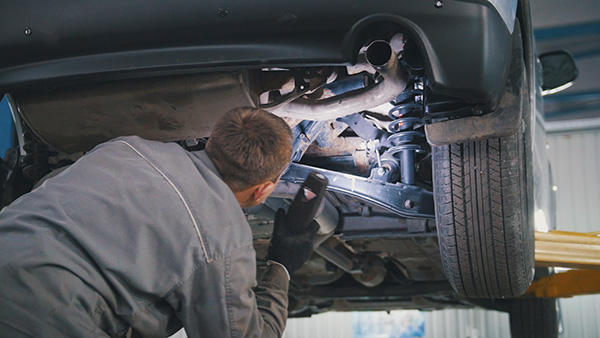
Bad shocks and struts can make a car feel strange before they make it feel broken. The vehicle still turns, stops, and gets you where you are going, but it no longer feels as settled as it used to.
A familiar road starts feeling rougher. The front end dips harder at stop signs. The steering needs more small corrections on the highway.
Those changes are easy to blame on tires, road conditions, or age. Sometimes that is part of the story, but worn shocks and struts can change the way the whole vehicle handles.
Shocks And Struts Control Movement
Shocks and struts do not hold the car up on their own. The springs carry the vehicle’s weight. Shocks and struts control how those springs move after bumps, dips, braking, and turns.
When they are working correctly, the tires stay more evenly planted on the road. The body settles quickly after a bump. The vehicle feels predictable when you steer, brake, or change lanes.
When shocks or struts wear out, that control fades. The car can keep bouncing, leaning, dipping, or rocking after the road has already changed. That extra movement is what drivers feel from behind the wheel.
The Car Can Bounce After Bumps
A worn shock or strut can let the vehicle bounce more than it should after hitting a bump. Instead of settling once, the body keeps moving. Drivers often notice it on the same roads they use every day.
A driveway entrance might feel sharper. A dip in the road might make the car rise and fall more than expected. At higher speeds, that extra motion can make the vehicle feel less steady.
This is not only about comfort. If the tire is bouncing instead of staying planted, grip can change. That can affect braking, steering response, and tire wear.
Braking Can Feel Less Controlled
Bad shocks and struts can make the front end dive more during braking. Some nose-dive is normal because weight shifts forward when you slow down. The problem is when the front of the car drops hard, the rear feels light, or the vehicle rocks after the stop.
That movement can make the brakes feel less confident, even when the brake parts are still working. The tires need steady contact with the road to stop the car well. If the suspension allows the body to move too much, braking can feel uneven or delayed.
A brake vibration or pull can also feel worse when suspension parts are worn. Brakes and suspension should be checked together when the complaint happens while stopping.
Steering Can Feel Loose Or Delayed
A car with worn shocks or struts can feel vague through the steering wheel. You turn, and the vehicle responds, but the body feels like it catches up a moment later. On the highway, the car may wander or follow grooves in the road more than before.
Drivers sometimes describe this as a loose or floaty feeling. It can be more noticeable during lane changes, freeway ramps, or quick steering corrections.
Steering problems can come from tie rods, ball joints, alignment, tires, or worn bushings, too. An inspection helps separate those issues from weak shocks or struts, especially when more than one part is worn.
Turns Can Feel Like The Car Is Leaning Too Much
Shocks and struts help control body roll during turns. When they wear, the vehicle can lean more than it used to. The steering wheel may still turn the car, but the body movement makes the vehicle feel heavier and less precise.
This can show up on curves, highway ramps, or even during normal neighborhood turns. Passengers may notice the movement before the driver does.
More body roll does not always mean the vehicle is unsafe at that moment, but it does mean the suspension is not controlling weight transfer as well as it should. Over time, that can add stress to tires, mounts, bushings, and other suspension parts.
Tires Can Wear In Strange Patterns
Tire wear is one of the clearest clues that shocks or struts are not doing their job. Cupped, choppy, or scalloped tread can occur when the tire bounces slightly as it rolls. The tire loses even contact with the road, then wears in patches.
The frustrating part is that this wear can get noisy. A driver may hear humming or rough tire noise and think the tires are the whole problem. New tires can help the sound for a while, but if weak shocks or struts caused the wear, the next set may wear the same way.
Regular maintenance should include checking tread depth and wear patterns, not just tire pressure.
The Ride Can Feel Harsh And Floaty At The Same Time
It sounds odd, but a worn suspension can feel rough over small bumps and floaty over larger dips. The car no longer absorbs impacts cleanly, and it also fails to settle the body afterward.
That mix makes the vehicle feel tired. It can clunk over rough pavement, dip during braking, lean in turns, and feel unsettled at speed. None of those symptoms should be ignored for months just because the car still drives.
Worn shocks and struts can also affect mounts, tires, alignment, and suspension bushings. Catching the issue early can prevent it from spreading to other parts.
Get Shocks And Struts Service In Covina, CA, With TL Motors
If your vehicle feels bouncy, loose, rough, floaty, or harder to control during braking and turns, TL Motors in Covina, CA, can check the shocks, struts, tires, steering, and related suspension parts.
Schedule a visit and get the handling checked before worn suspension parts make the car less predictable on the road.