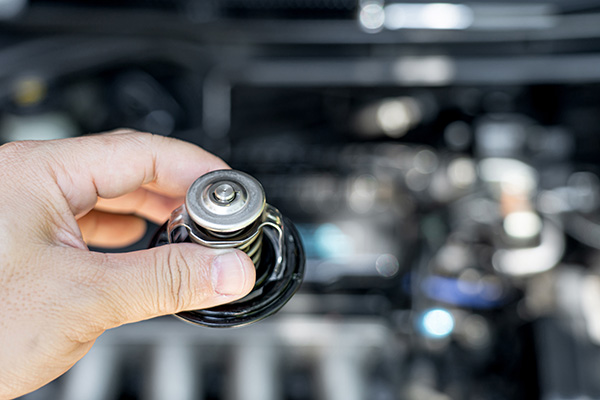
A failing thermostat is one of those car problems that often starts quietly. The vehicle may still run. The engine may not overheat every time. The heater may work one day and act strange the next. It is easy to brush off the early signs because they can seem small or inconsistent.
At our shop, we see this happen all the time. A driver notices the temperature gauge acting a little differently than usual, or the cabin heat is not as steady, or the engine seems to take forever to warm up. Because the car still drives, it gets pushed down the list. Then one day the thermostat sticks at the wrong time, the engine gets too hot, and what could have been a manageable repair turns into a much more stressful situation.
That is why thermostat problems are worth catching early. The thermostat may be a relatively small part, but it plays a major role in how your engine manages temperature. When it starts failing, the cooling system stops behaving the way it should, and the warning signs usually show up before the car leaves you stranded.
What The Thermostat Actually Does
Your engine thermostat controls the flow of coolant between the engine and the radiator. When the engine is cold, the thermostat stays closed so the engine can warm up to operating temperature more quickly. Once the engine gets hot enough, the thermostat opens and allows coolant to circulate through the radiator, where heat can be released.
That balance matters a lot. The engine needs to warm up properly, but it also needs to stay from getting too hot. The thermostat is what helps manage that change.
When the thermostat is working correctly, most drivers never think about it. When it starts sticking open or closed, though, the engine temperature can become unpredictable in ways that affect performance, comfort, and reliability.
The Temperature Gauge Starts Acting Weird
One of the first clues we often hear about is a temperature gauge that is no longer behaving normally. Maybe it climbs higher than it used to in traffic. Maybe it takes forever to reach its usual position. Maybe it moves around more than normal instead of staying steady once the car is warmed up.
A healthy cooling system should generally keep engine temperature pretty stable. So if the gauge starts doing something new, that matters.
If the thermostat is sticking closed, coolant may not circulate properly, which can make the temperature rise quickly. If it is sticking open, the engine may run cooler than normal or take too long to warm up. Either way, the gauge often gives you one of the first hints that something is off.
The Engine Takes Too Long To Warm Up
A lot of people think thermostat trouble only means overheating, but that is not always the case. If the thermostat is stuck open, coolant may start circulating too early and too freely. That can make the engine slow to warm up, especially in cooler weather or during shorter trips.
At first, this may just seem like the car is taking longer than usual to settle into normal operation. The heater may not get warm quickly, and the temperature gauge may hover lower than it normally would.
That kind of symptom is easier to ignore than overheating, but it still matters. An engine that does not reach proper operating temperature can affect fuel efficiency, performance, and overall drivability.
Your Heater Stops Working Right
The cabin heater depends on hot engine coolant. So when the thermostat is not managing coolant flow correctly, the heat inside the car often becomes one of the first things drivers notice.
Sometimes the heat is weak. Sometimes it comes and goes. Sometimes it takes far too long to get warm. This is one of those symptoms that people often blame on the weather or assume is just the car “being old,” but the thermostat can absolutely be part of the reason.
When the engine temperature is not being controlled properly, the heating system often feels the effects too. That is especially true if the thermostat is stuck open and the engine never gets hot enough to deliver steady cabin heat.
The Car Overheats In Traffic Or At Idle
This is one of the more serious warning signs, and it is often where drivers finally realize the thermostat issue is not minor anymore. If the thermostat sticks closed, coolant flow can be restricted enough that the engine starts running hot, especially in slow traffic, at red lights, or during long idling periods.
That does not always mean the thermostat is the only possible cause of overheating, but it is one of the common ones. And if the overheating seems to come and go, the thermostat becomes even more suspect because sticking can be inconsistent.
This is where thermostat problems become especially risky. An engine that overheats even once is telling you the cooling system needs attention. Waiting to see whether it happens again is usually not a great strategy.
Temperature Changes Feel Inconsistent
One of the trickiest parts of thermostat failure is that it can be inconsistent. The thermostat may not fail in a clean, obvious way right away. It might stick sometimes and behave normally at other times. That creates the kind of symptoms drivers second-guess.
You might notice:
- The temperature gauge suddenly rises and then drops
- The heat feels strong one trip and weak the next
- The engine runs fine on one drive and hotter on another
That inconsistency is part of why thermostat problems get ignored longer than they should. The issue does not always feel dramatic enough every single trip to force immediate action. But those changing patterns are exactly the kind of clue we take seriously in the shop.
Fuel Economy May Start Slipping
This is one of the less obvious signs, but it can happen. If the thermostat is stuck open and the engine is running cooler than it should, the engine management system may stay in a richer operating mode longer than normal. That can hurt fuel efficiency.
Most drivers will not spot a thermostat problem from fuel economy alone, but if the car is taking too long to warm up and the gas mileage has dipped too, that can help complete the picture.
It is another reminder that thermostat issues are not only about overheating. Sometimes they affect the way the vehicle runs long before they create a true breakdown.
Warning Lights May Show Up
On many modern vehicles, thermostat trouble can eventually trigger a check engine light or a temperature-related warning. That is especially true if the engine is running too cool for too long or if temperature readings start falling outside what the computer expects.
This does not happen in every case, and it does not replace paying attention to the gauge or the way the vehicle feels. But if a warning light appears along with temperature oddities or strange heater behavior, it deserves attention sooner rather than later.
Why Waiting Can Get Expensive Fast
A thermostat is usually much cheaper to deal with than the damage that can happen if it is ignored. If it sticks closed and causes overheating, you are no longer just talking about one part. Now you are risking damage to gaskets, hoses, cooling system components, and in more severe cases, major engine parts.
That is why we always encourage drivers to pay attention to the earlier signs instead of waiting for the full breakdown. A thermostat problem caught during the “something feels off” stage is much easier to handle than one that turns into a stranded-on-the-shoulder situation.
What We Look For During Diagnosis
When a customer comes in describing possible thermostat trouble, we do not just swap parts and hope. We look at the full cooling system picture. The thermostat is important, but so are coolant level, radiator condition, cooling fan operation, water pump health, and signs of leaks or trapped air in the system.
We want to know whether the thermostat is truly the cause or whether it is one part of a larger cooling system issue. That is the best way to make sure the repair actually solves the problem.
Catch It Before It Becomes A Breakdown
A failing thermostat often gives you a window of warning if you know what to look for. A temperature gauge that acts differently, weak or inconsistent cabin heat, overheating in traffic, or an engine that takes too long to warm up are all signs worth taking seriously.
If your vehicle is showing any of those symptoms, bring it to TL Motors in Covina, CA. We can inspect the cooling system, find out whether the thermostat is failing, and help fix the problem before it turns into a bigger repair or leaves you stranded.
Call us today or stop by to schedule a cooling system inspection.